
Live on Play Store
ReflexLab
Train how fast your brain can choose.
4 cognitive modes · Global leaderboards · Detailed analytics
5 ★Play Store rating
150+Downloads
4Game modes
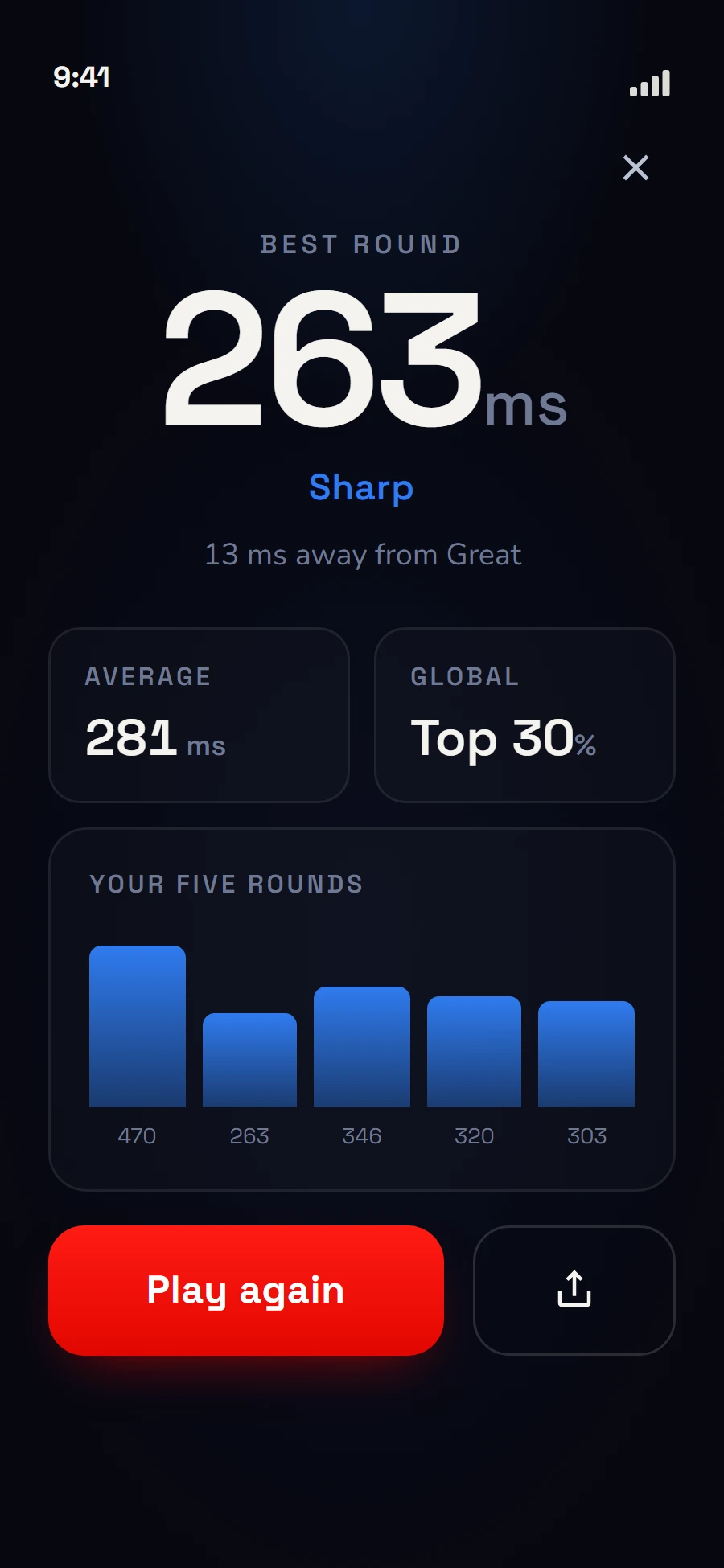

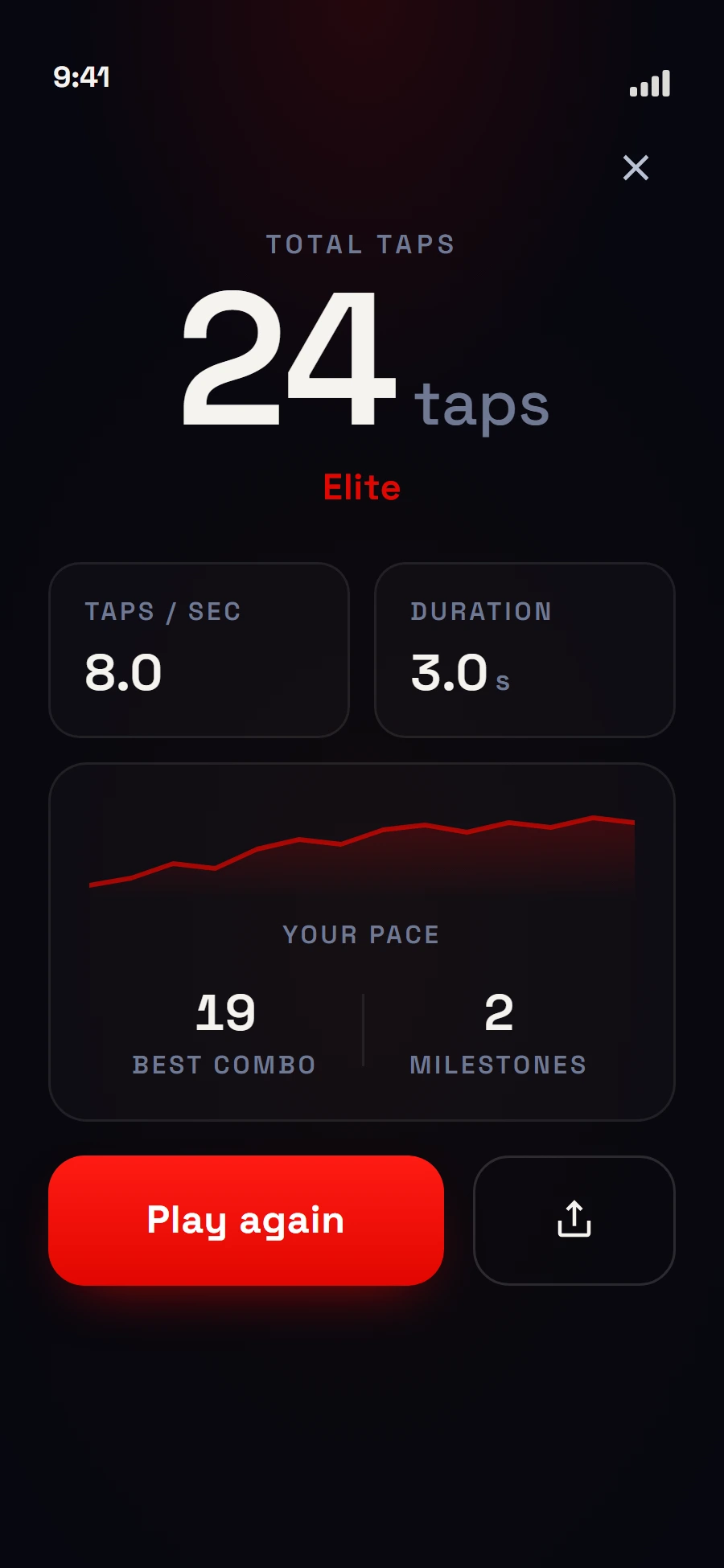
Small games that test how your brain works.
One idea per game, polished until an afternoon quietly goes missing.
Train how fast your brain can choose.
4 cognitive modes · Global leaderboards · Detailed analytics
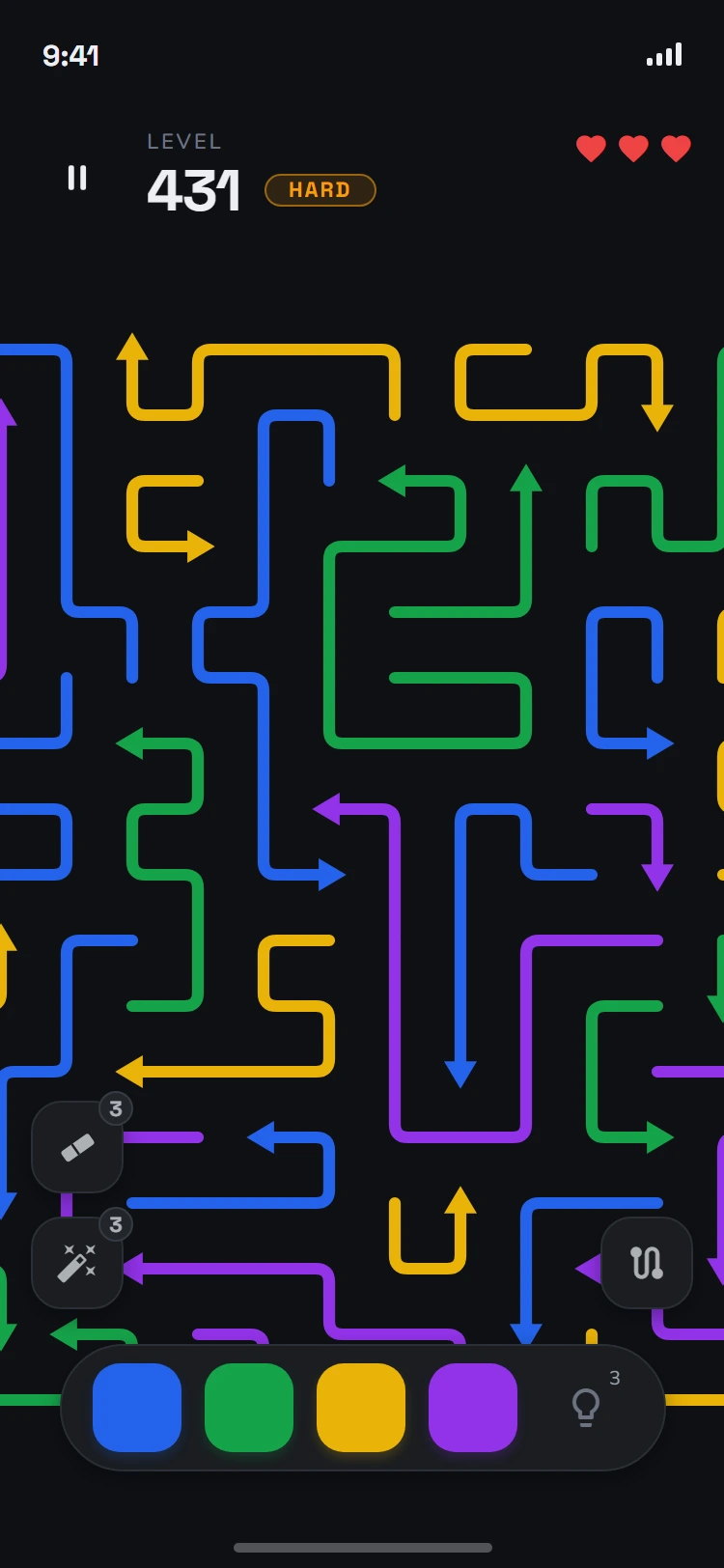
Arrow escape, evolved.
Pick a color and every matching arrow turns passable. Thread the frozen ones off the grid, two moves ahead.
I'll lose a whole evening to a Sudoku or a nonogram and not feel it go. It's the logic that gets me: a handful of plain rules that fold into something you can turn over for hours. I've always cared more about why a puzzle works than about finishing it.
That fascination is the reason RogueWave Labs exists. I'd play something clever and not be able to stop poking at it. What if this rule were sharper? What if it felt better under your thumb, or pushed one step past where it usually stops? Sooner or later you have to quit critiquing and go make the thing. So that's what I do: small games, each one a single idea taken as far as I can take it, then a little further every time I come back to it.
I didn't start out knowing how to build any of this, and I won't pretend otherwise. I just won't let that be the reason it doesn't get made, so I use every tool I can get my hands on, AI included, to close the gap between what I picture and what I can ship. It's working. Each release lands closer to the thing in my head than the last, and I'm having an absurd amount of fun closing the rest of that distance.
If the mechanic can't carry the whole game on its own, it's the wrong mechanic.
The whole rule set should fit in one look. Everything after that is depth, not homework.
Timing, haptics, the way a move lands — the invisible details get the most hours.
Short sessions, honest difficulty, no padding between you and the next round.
I read everything. Email is the best way to reach me, and I usually reply within a day or two.