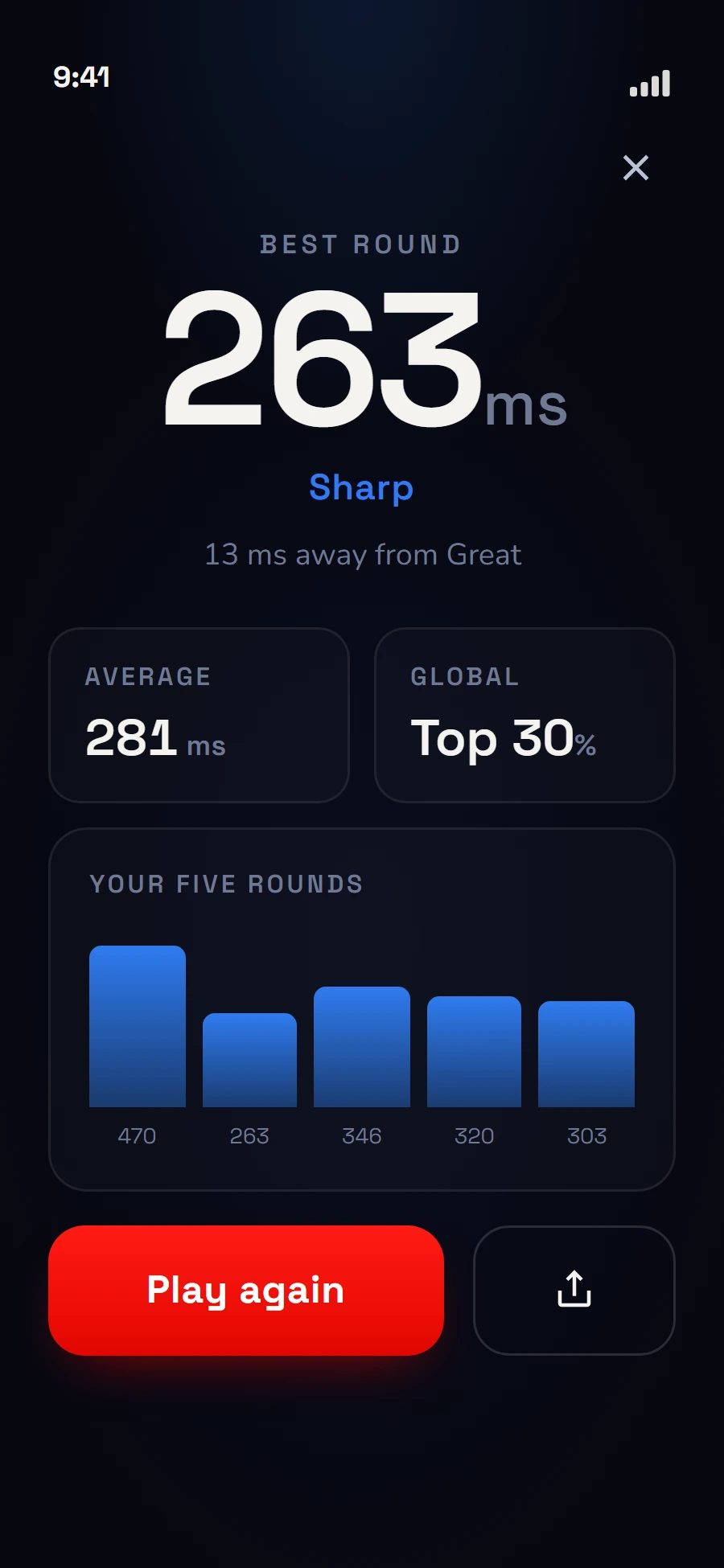
Classic
React to the change
The screen holds, then flips. The instant it changes, tap. Go early and it's a fault. Pure stimulus and response.
Scored in milliseconds
Five modes, each scored on its own scale. Train your reflexes, your focus, your timing and your memory — then see where you land on the global board.

Go on — it's playable.
Each mode targets a different system — raw reaction, motor speed, impulse control, visual-motor timing, and color memory. Every one strips the screen back to just you and the number.
The screen holds, then flips. The instant it changes, tap. Go early and it's a fault. Pure stimulus and response.
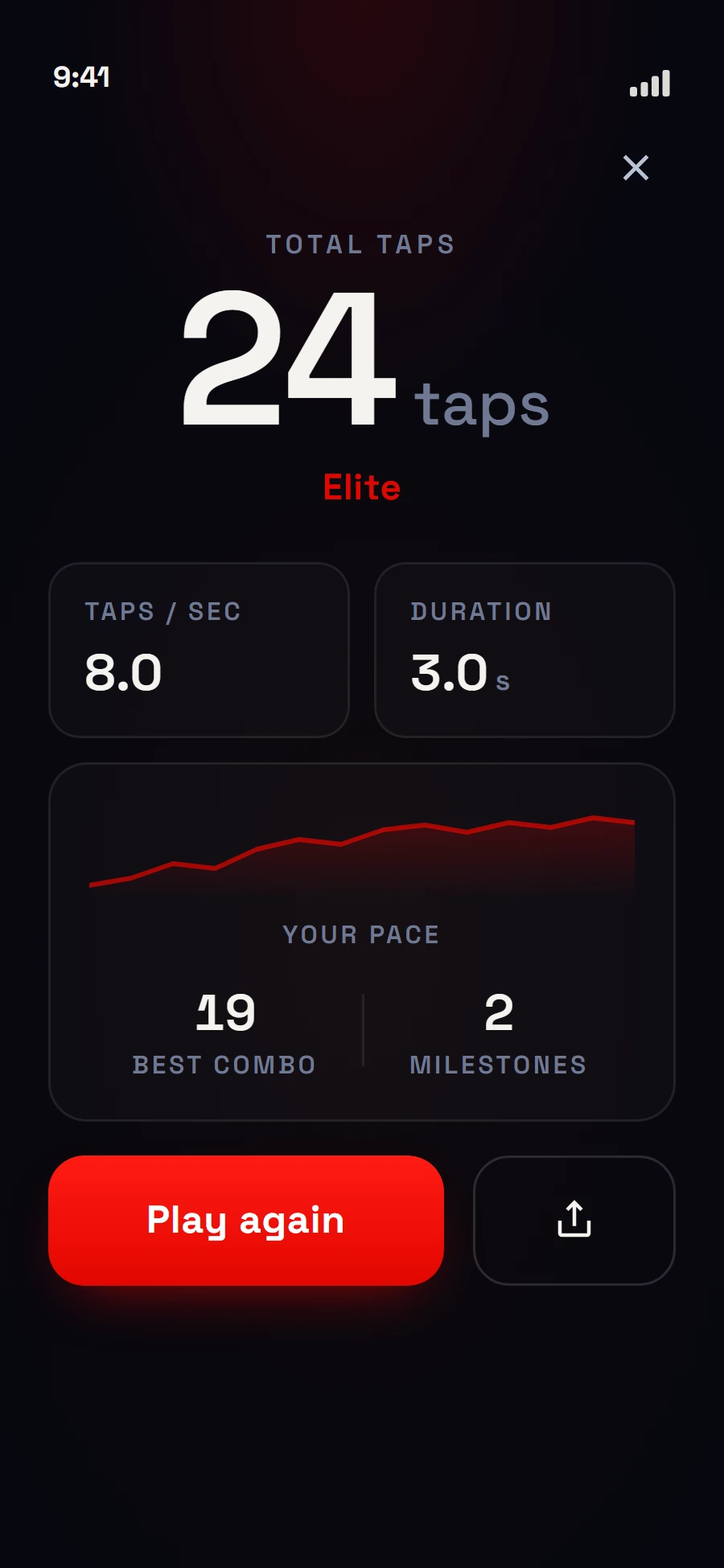
Three seconds on the clock. Hammer the screen and hold your rhythm. Your finger is the bottleneck.
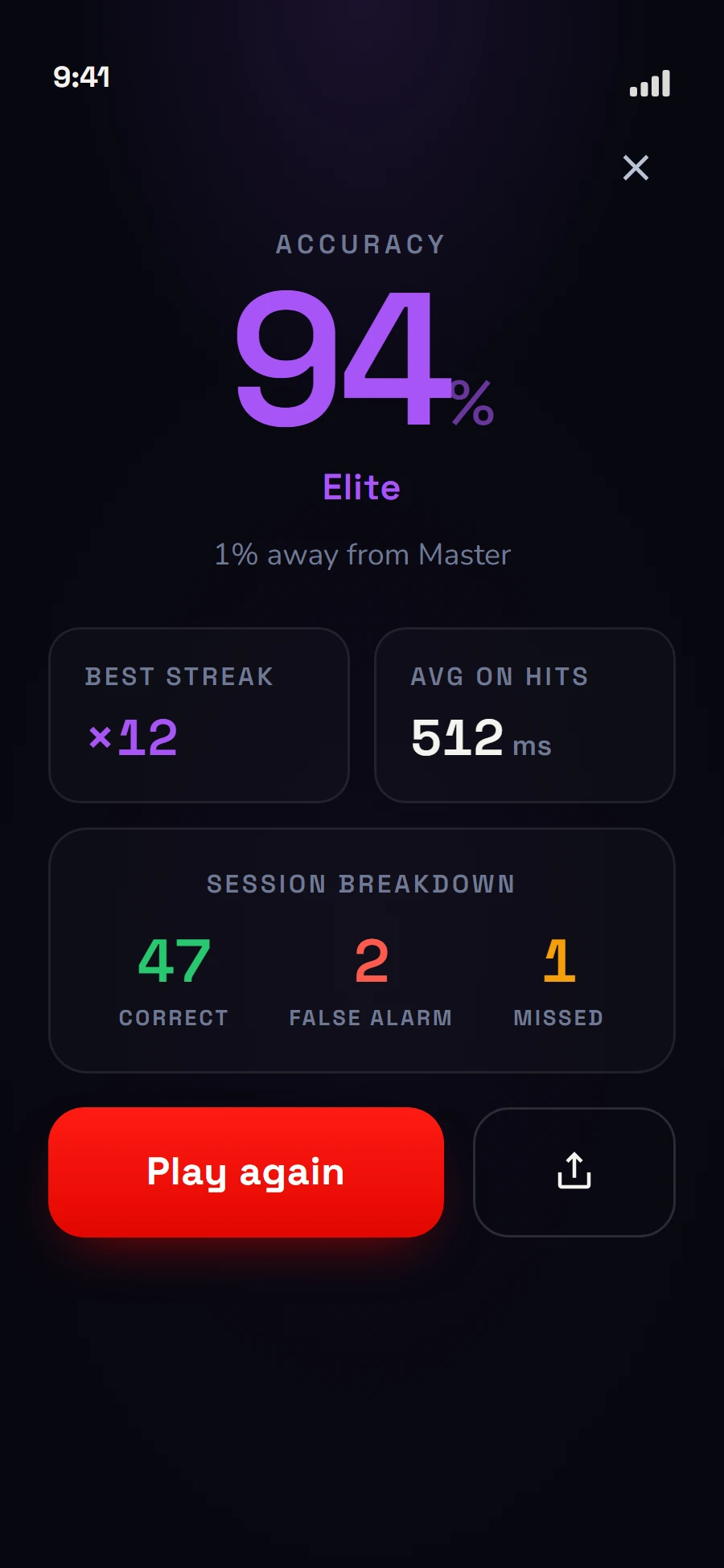
The word names a color; the ink is another. Tap when the word and the ink agree — and sit on your hands when they don't.
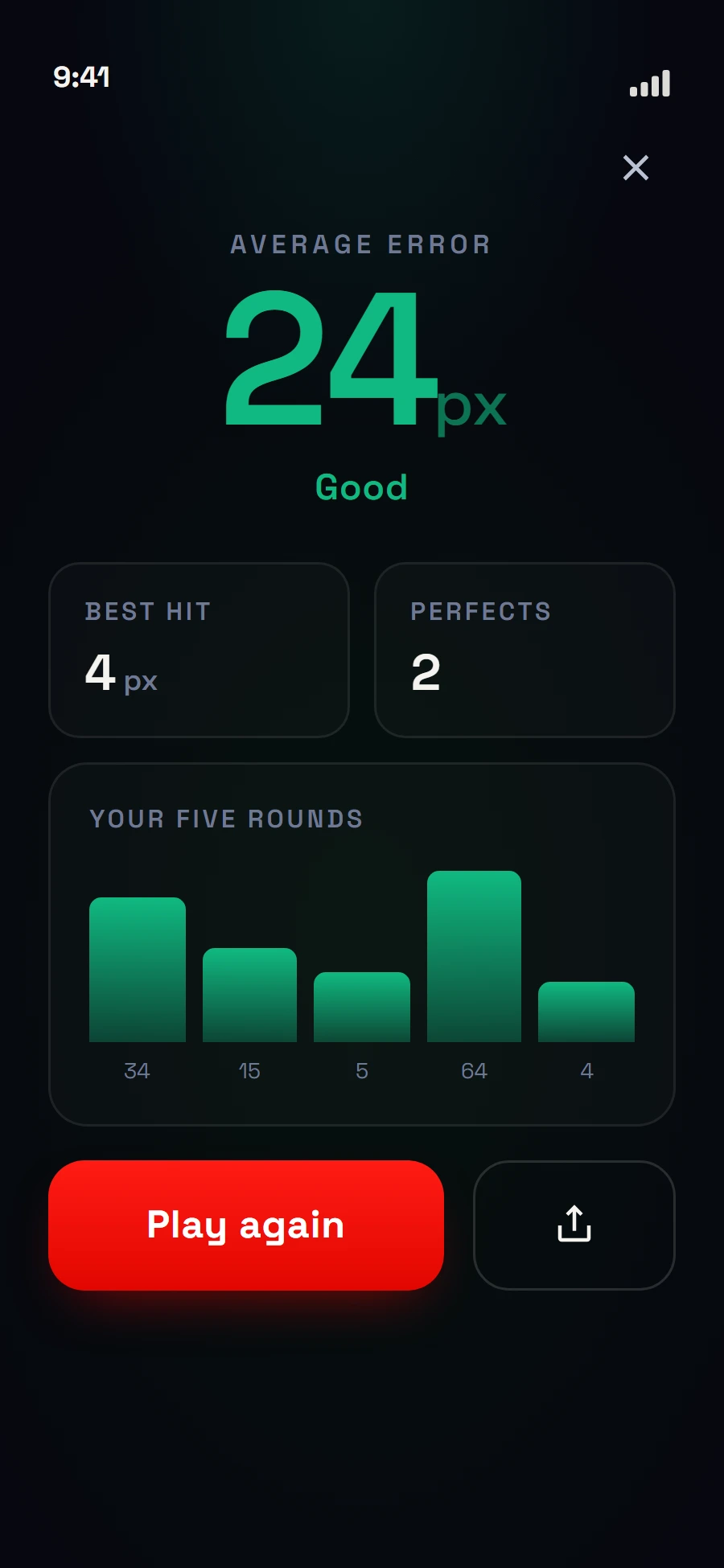
A ring flashes once, then vanishes. Another swells up from the center — tap the instant it matches the size you memorized. Scored to the pixel.
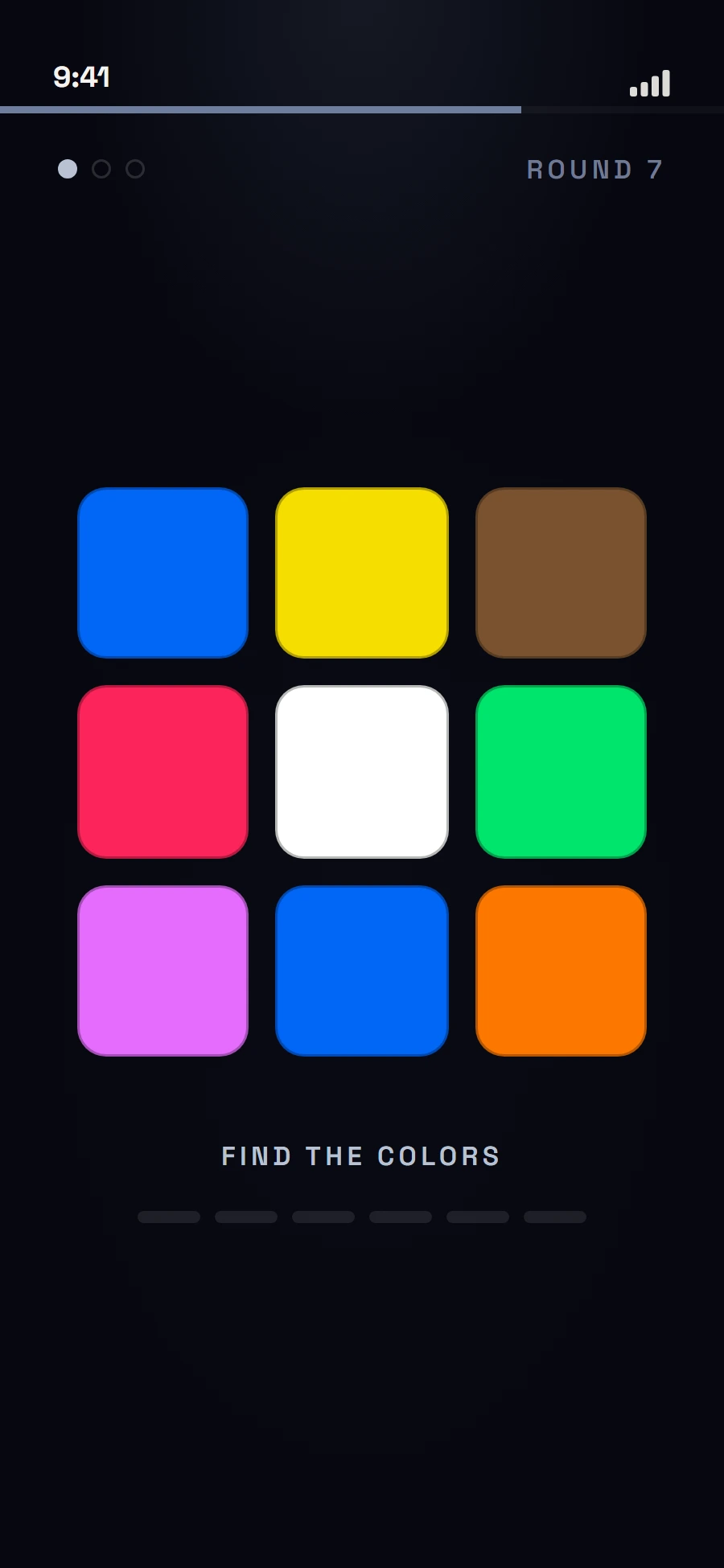
Tiles light in order, then the board shuffles under you. Tap the colors back in the same order — the places have moved, so only the colors help.
Pick a mode. Each one drops your score onto its own scale — here's every tier, and what it takes to reach it.
Under 200 ms is genuinely fast — most adults start around 250 ms and find another 20–30 ms once they stop guessing and start reacting. The percentiles are ReflexLab's own fixed estimates, set against published reaction-time ranges to give each tier a sense of scale. They're a yardstick, not a live measurement of everyone playing.
One run tells you today's number. The rest of the app tells you whether you're actually getting faster.
A global board for every mode, and they all reset every Monday — so the ladder's never out of reach. Post a time and see exactly where you land this week.
Every day you play lights up a square — your last 90 at a glance.
Play anything on a given day and it counts. Miss a whole day and the count resets.
Best, average, and your last hundred attempts per mode, broken down. Share the card whenever you beat your record.
Free to play, works offline, and no account needed to start.
The average adult sits around 250ms. Under 200ms is fast, and under 150ms is the range pro players chase. ReflexLab scores every Classic tap across ten tiers, from Superhuman down to Still Waking Up, each with its own percentile.
Yes. It's free on Android and supported by the odd ad. All five modes are unlocked from the first launch, and nothing sits behind a paywall.
Different parts of the same machine. Classic measures raw reaction time, Rapid Fire measures motor speed, Stroop pressures your focus and impulse control, Phantom Ring tests how precisely you can time a tap, and Flash Recall tests how many colors you can hold in order while the board shuffles underneath them.
Each mode keeps its own global leaderboard that resets every Monday. Classic results also get a tier and a percentile, so you can see your rank for the week alongside roughly where you fall among everyone who plays.
No account to start, and the modes play fine offline. You'll want a connection for the weekly leaderboards. The daily challenge comes from the date on your device, so that works offline too.
Five modes, one number that won't flatter you. It's free, it's on Android, and the first run takes about ten seconds.